Almost seven weeks are over, since I started my trip, and I didn’t find any time to write; there were just too many impressions, too much things that happened, and: So many places I want to write about….I really didn’t expect to find that many alternative places on my way…
I went from Madrid directly to Bembibre, San Facundo, Matavenero, and expected me to stay for like one week, or something like that. But finally I spent almost three weeks there, and still didn’t get tired of being there…To be honest, I were thinking about staying there for all the time of my trip, but I’m just too curious about what other places like that are around here in Spain, Portugal…So now I am in Fisterra, in a small Café, writing these lines….(this was 3 weeks before 24.10.18!)
I think, some of you already heard about stuff like ecovillages, communities and house projects in Spain, but for those who’re really new to this subject….
In Spain are over 3000 abandoned villages; some of them are left because of an economic crisis, some because of rural exodus, some because of forest fires…Since a few years, people return to those abandoned villages, build up the ruins again, grow gardens, try to live different than people do in cities, try diverse forms of living, some of them are just trying to live as eco-friendly as possible, some communities are based on a same leading idea, sometimes spiritual, sometimes very practical, but always have in common the idea of living together in a different way, than most people in our capitalistic system.
One of the most popular villages of those is Matavenero, placed in the mountains of El Bierzo.
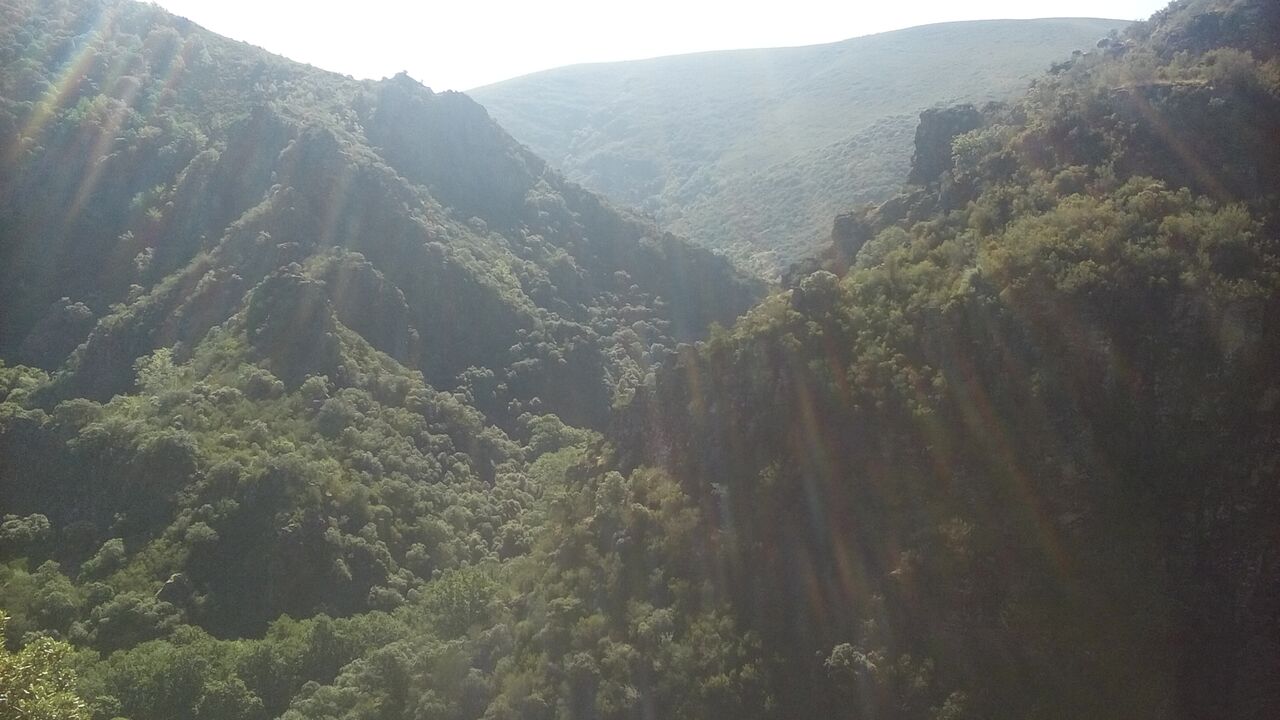
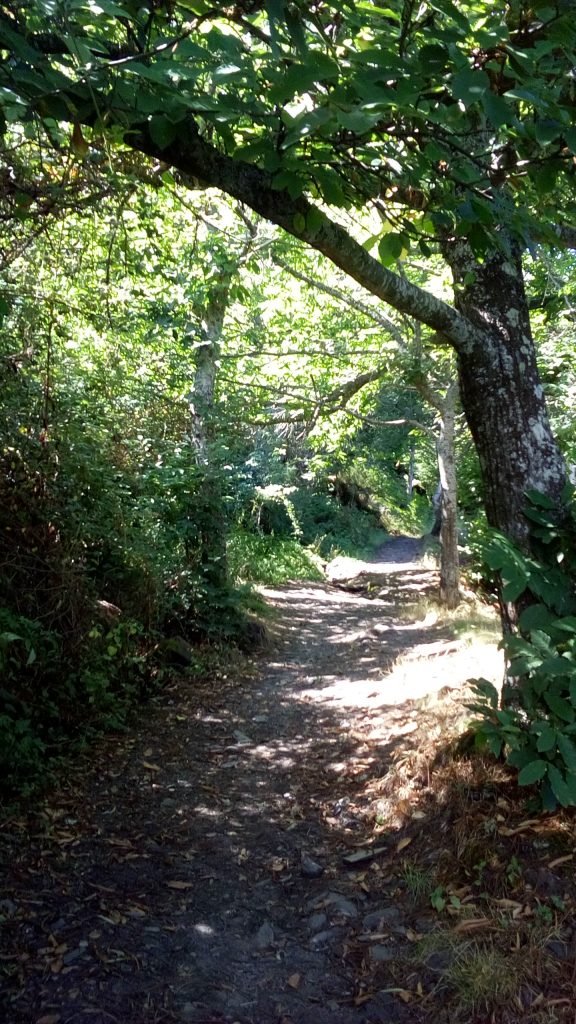
To get there, I took a Bus to Bembibre, a small city near Leon, from there a Taxi to San Facundo, and finally you have to walk….when I’ve been there last year, I thought the way would be like a few kilometers, not that long, and so I arrived almost in the darkness, so, even if there’s different information on some websites; from San Facundo to Matavenero you’ll need like 2 hours, and it’s a hard way, more like a path, all the time uphill, especially in the end…but it’s worth it; you walk in between beautiful mountains, all the time more or less next to a river, through a forest of oaks, sometimes over fields of rocks…and even if you can’t get the wrong way, there’s a nice map in San Facundo..
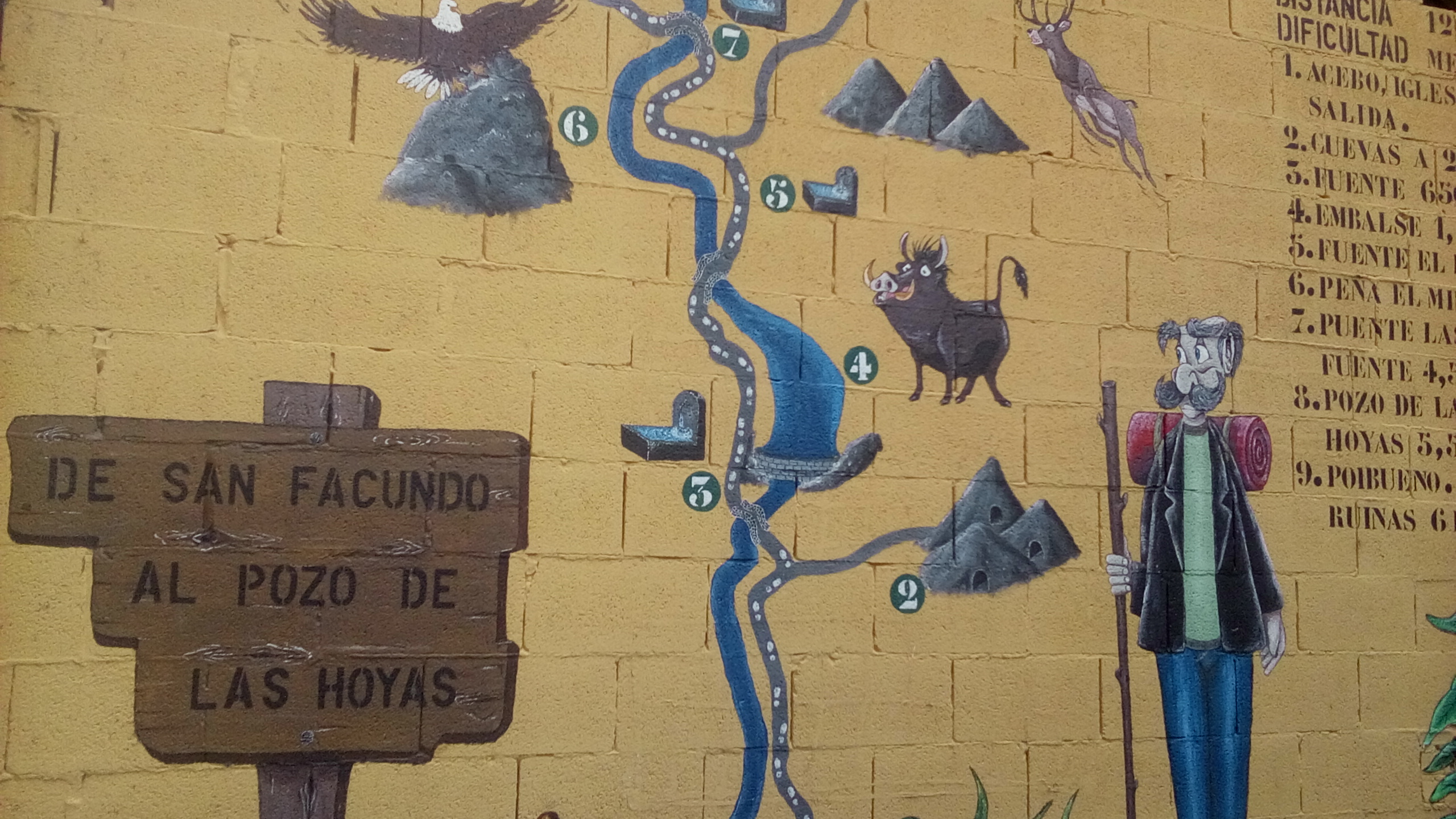
So, but that’s all just about how to get there…and I didn’t plan to write that, but as I experienced, it’s pretty hard to get some information about how to get there, and many people who finally ended up there as visitors, found that place accidentally….
Me not. I’ve been there last year for two weeks after I read some information about it in the book “Eurotopia”, a community directory, and on some websites…but there’s not that much information…so all I knew was that it’s a big ecovillage, one of the oldest, up in the mountains.
When you arrive there, you first might be confused about how quiet it is; you don’t hear anything, and you also see a few houses, small stone houses, with wooden roofs, and when you walk on there’s maybe a dog, you see the first crazy house constructions, on the left side you can see a huge valley, the mountains on the other side, big rocks, then some playing children, not even looking at you, because they already are used to meet new people…however, and that’s the first big difference to most other communities which are as big as Matavenero, you just can walk in, say hi, and they’ll show you a place to stay:
There*s the Cocina Comun, a big house, upstairs is the library, and downstairs a room, in the middle an oven, on the left side some mats to sleep, on the right side some places to sit, a table, some shelves with spicery, left over food from visitors who have been here…
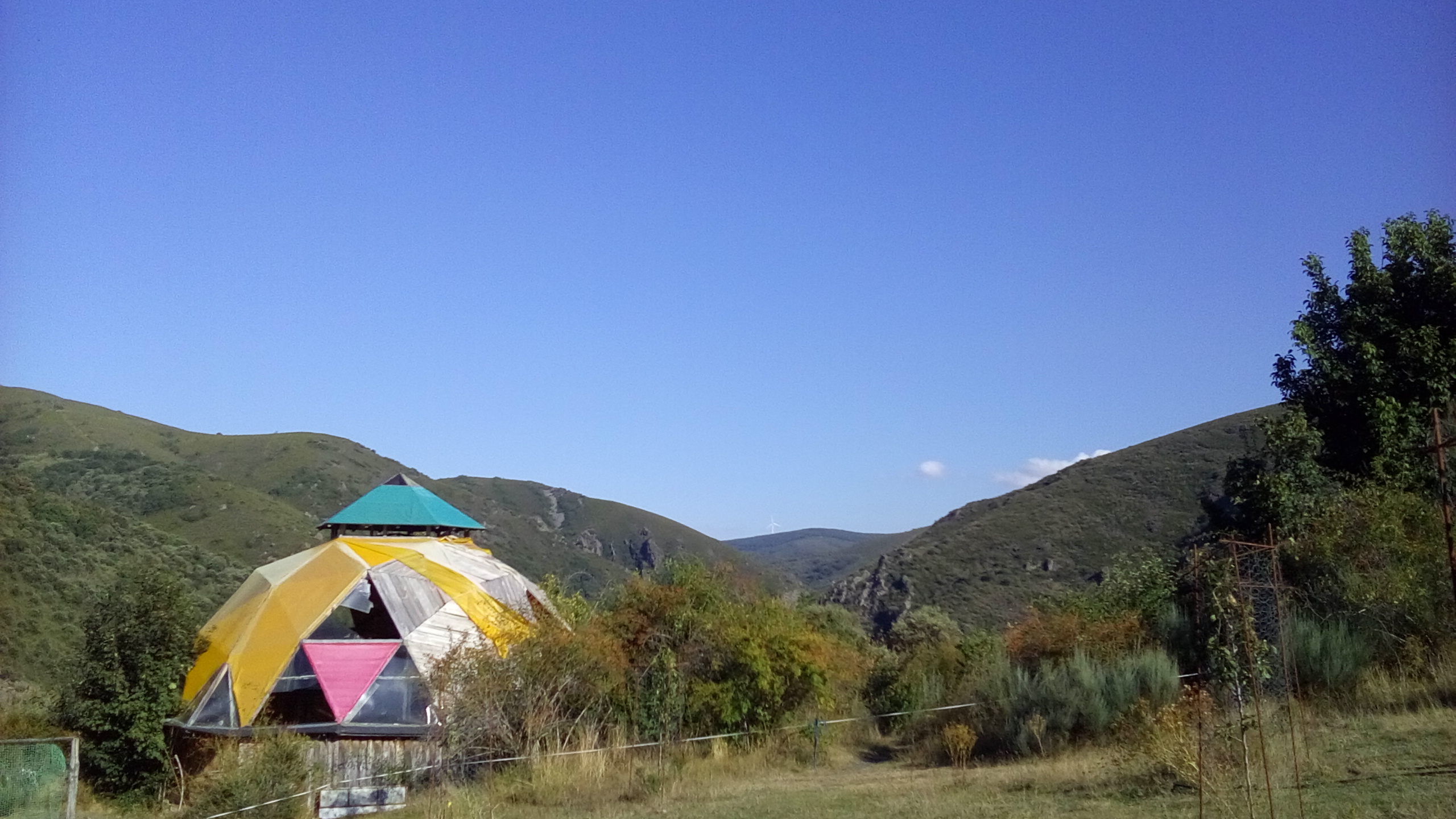
But you also can camp, next to the dome.
Wherever you stay there, it’s for free, and you don’t need to register or something like that or to know how long you want to stay there. It’s not a bad idea to bring a little bit of food with you, even if there’s a lot in the Cocina Comun, like oil, salt, rice, oats…but you never can be sure about it.
For cooking there’s a small gas stoven, also a wood stoven, but no fridge. I always had nice food over there, cooked together with other visitors, or maybe you also get invited by someone living there; people are very friendly, and interested, as soon as you show some interest and they also love to get some help in the garden or with collecting wood, repairing the paths through the village, and other work like that. Usually, in exchange you will receive some vegetables, or get invited for dinner, especially wednesday there’s the community work day; everyone can take part, and do some work in the village, like repairing, building, and after it there’s a community dinner for everyone who helped.
There live 70 people, some in stone houses, some in wood constructions; there’s a huge diversity of houses; people just built what they wanted to build, and the government just doesn’t care, the only rule, as far as I know, is, to build only new houses in places where has been a ruin. That’s why it’s not that easy to get there and build a new house now, because there are not many ruins left and in every house there are already people living in, at least a part of the year; so there’s also a chance sometimes, to live in a house for some time, if the owner invites you to.
That’s how I spent my almost 3 weeks there; I lived together with a friend (if you read this Ale: right now I’m having all we dreamt of, Cheese and redwine…I’ll never forget our secret code “Y” maybe one day Fonfrìa..) in a house of someone who lives there part-time, and works outside the village for some months. In return we cared for the house, but mostly, to be honest, my friend worked on some parts of the house; repaired some stuff, built a shelf and together we made a fireplace, in front of the house…collected kilos of pears, apples, one time we found out that there were growing mushrooms which you can eat…and also some wild herbs, blackberries, dried cherrys…and that’s how people spend their time up there.
A usual day for us began without a ring, (sometimes for me I put one at 9,10.. bc otherwise I am able to sleep 11 hours, since I am on my trip, whyever..) we woke up, I did yoga for like almost two hours, then we had breakfast; fresh bread, baked by a woman here, honey from a valley in these mountains, mostly from arnica flowers…and, if available, some butter or just a herb pesto or olive oil on the bread…and of course coffee and some tea, collected outside.
Most of the days we were having great talks after the breakfast, sitting next to the window, drinking coffee, eating fruit, sometimes for a few hours, sometimes we had plans, like going to the library, looking around for a map of Spain and Portugal, helping people collecting fruit in the garden, or cutting some plants, building a wall to stabilize the path through the village, whatever…Then again coffee, cookies, often I went to the Cocina Comun in the afternoons to get updated about what’s going on in the village…Later in the evening we often cooked in our place, and a few times we got invited by somebody living there, or just ate together with some visitors in the Cocina Comun. The late evenings, there are often jam sessions, at least every monday, a drum session around the fire in the middle of the village, and if it’s somebodies birthday, usually there will be a party! Also quiet evenings are not unusual, and some people go to bed early, as they get up early to do some work, before the sun gets really hot. So, normally between 1, 2 p.m. and 5 p.m. it’s pretty calm in the village, as everywhere in Spain, and also because in summer it can get really hot, as soon as the sun shines…and there are not that many trees spending shadow.
Maybe you already wonder, if they have electricity, what about water…and wi-fi?!
Yes, yes and yes, of course they have water, of course they have electricity and also wi-fi!
The water comes from a spring a few kilometres away and flows through the village, and as I heard, but it’s also really logical, the water is the best on top of the village. The water is fresh and everything, but the ph-value is not that good, so some people get problems with their teeth and bones, over the years…and if it’s not raining for a long time, the water may get less, but always enough.
For electricity a lot of the houses have solar panels, and there’s usually enough electricity to have light, charge a phone, ect…
Most people don’t have internet or net in the village with their phones, but as soon as you walk uphill, for example next to the first-aid-place, you’ll get some connection, or at least at the parking, which is placed 10 minutes away, uphill. There’s also the Oficina, in which you’ll find a computer and where you can connect to wi-fi, after you asked somebody for the code, but my experience is, that you’ll completly forget about your phone, maybe only needing it for taking some pictures, or writing down a new contact.
Finally, to give you all important information,…the shower and toilet…Actually there are some simple compost toilets, toilet paper is often rare, so it’s not wrong to bring some with you. For guests there’s also a nice shower, next to the dome, where’s also heated water, if the sun shines.
Life up there is of course not as comfortable as in a city or a “normal” village, so you can’t get directly into the village by car, but to the parking, and the next stores are a few kilometres away…but when people go to the city it’s always possible to give them a list of stuff you need, so that’s no problem at all, and great to learn what you really need and to learn to take control about your consumption and not let it control you.
Many people don’t have to buy much food, because they have their own gardens and there’s also a common garden, bread you can get from a woman up there, fresh baken, for five euro, and it’s really delicious. Marmelade, vegetables in oil, tea..is also selled by some people there, as some creams and oils for massages and healing, and also jewelry, postcards…
As you see, there’s everything you need, and everything you have, if you live somewhere else…and even more, because it’s not just eco, there exist also some community projects, houses…like the Cocina Comedor, where everyone can eat, if people cook there, the Cocina Comun, where you can stay for free, can use some stuff for cooking, play some instruments, that are in there…Above there’s a library, full of many good books, and next to it a room with secondhand clothes for free, but you have to ask for the key. And, there’s one more important house; the school, one of the biggest houses, and yes, there’s a real teacher, the only person in the village, that gets paid for it’s work.
All other people earn money in different ways…some of them sell stuff to tourists, some work outside the village, others get money from the government (old people, people with kids..) and the whole village gets money of the government too, because of the wind generators around, that are placed on the ground of Matavenero, so the government pays for that.
However, you don’t need much money up there; electricity and water are for free, and also a lot of food grows in the gardens and nature around.
But there’s even some more, that makes this place a community; there’s a plenum, normally once a week and also the community work.
And, as you can feel when you’re there, people share a peaceful, openminded way of living, and live the lifes, they want to live, in (I really would call it) anarchy; there exist no real rules, do what you want, as long you don’t restrict the freedom of somebody else and everybody feels well.
If you have some more questions, text me!
And if you now a place that might be interesting for me to visit (in Spain, Portugal or Morocco) feel free to tell me about it!